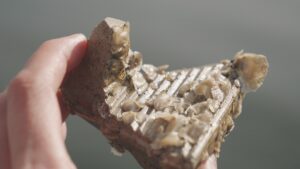
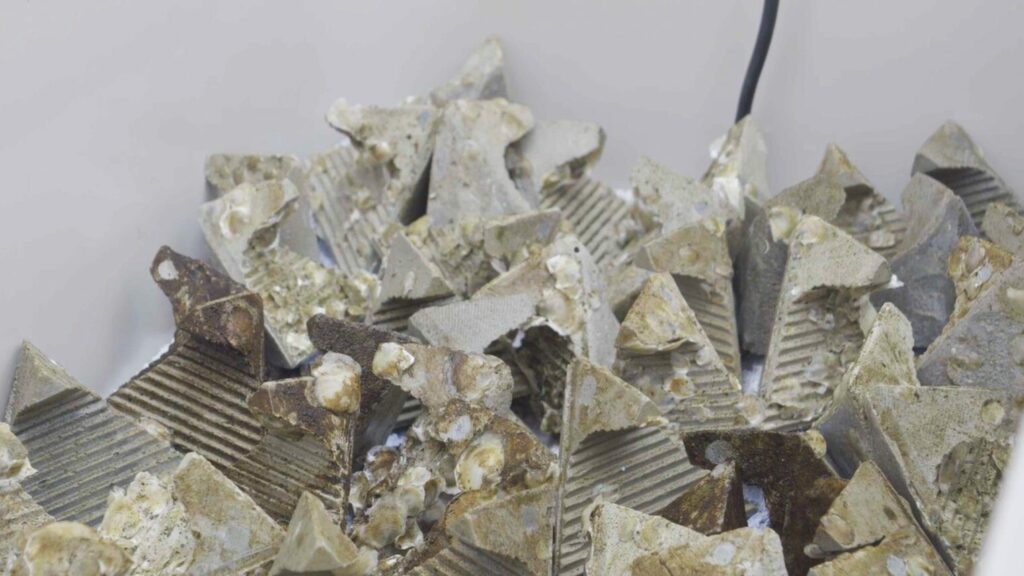
image of biodegradable ReefBooster product

BOOST

BOOST (Better Oyster Outplacement & Seeding Techniques) focuses on European flat oyster (Ostrea edulis) reef restoration by using cutting-edge, scalable solutions. Innovations include the ReefBooster, a biodegradable structure that enhances oyster larvae settlement, Automated Underwater Vehicles (AUVs) for precise, repeat monitoring, and AI-driven image analysis for large-scale restoration tracking.

Research spanned from hatchery breakthroughs to real-world testing near the Port of Rotterdam, demonstrating successful oyster cultivation and habitat development. By combining technology and ecology, BOOST shows the potential for efficient, data-driven marine restoration.

This project received financial support from the Top Sector Agri & Food and would like to give a special thanks to Gemeente Alphen aan den Rijn and Port of Rotterdam.  

April 2023 - October 2024

Project dates

Port of Rotterdam, Prinses Margriethaven (NL)

Location

BlueLinked, Wageningen University & Research, Boskalis, The Rich North Sea, Lobster Robotics, Advanced Tower Systems

Project lead and partners

European flat oyster, benthic species

Target species

  • Stand-alone structures
  • Scour and cable protection

Methods

The ReefBooster’s substrate compositions were tested for spat settlement, marine life attachment, and degradability. BlueLinked demonstrated the sucessful cultivation of flat oysters from broodstock to spat in their hatchery. To tackle large-scale monitoring, AUVs conducted precise, repeat surveys, tracking ReefBooster placement, movement, and spat growth. Advanced AI image analysis was developed to identify and measure oyster spat, enabling scalable and efficient restoration assessments. 

  • Hatchery Experiments: ReefBoosters, hand-sized structures for oyster larvae settlement, were created using four material compositions: tras cement, lime, shell powder, and gypsum). Each material prioritized sustainability, bio-receptiveness, and degradability. In BlueLinked’s biosecure hatchery, adult oysters from a Bonamia ostreae-free region provided larvae for cultivation. Settlement was observed across three experiments, using 240 ReefBoosters. Photos and AI monitored oyster spat presence and surface area during cultivation. Spat detection and quantification models were developed using Cascade Mask R-CNN. 
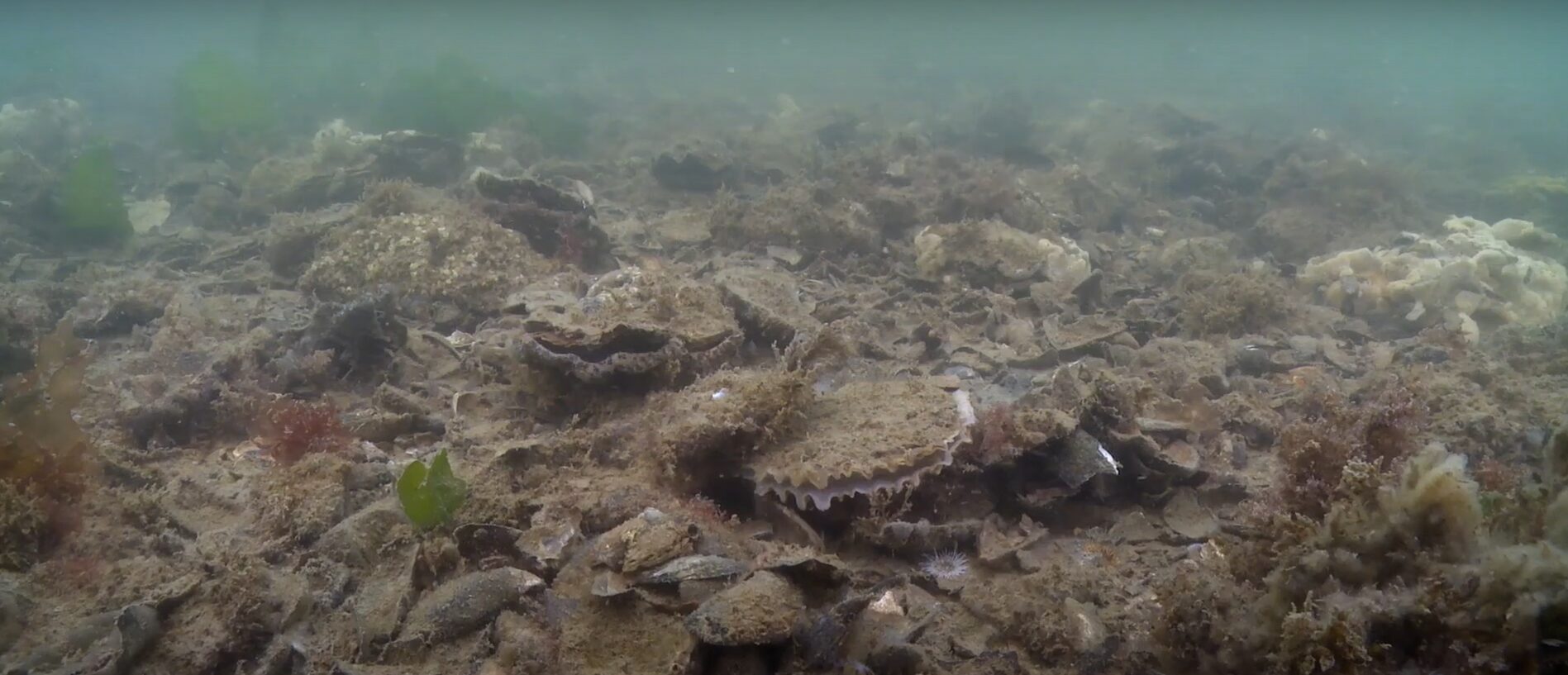
  • Nearshore Experiments: The ReefBooster design, initially developed in a previous project, was simplified within BOOST to facilitate large-scale production.Both the original, and simplified design were tested in nearshore experiments in the Prinses Margriethaven of Rotterdam. Over 4,000 ReefBoosters were deployed across four major plots, with installation occurring on different dates. Most ReefBoosters were manually dropped from vessels, while 350 were anchored for degradability and bio-receptiveness monitoring of marine species.Approximately 100 dropped ReefBoosters were covered with oyster spat. 
  • Monitoring: BOOST’s monitoring was split into two main processes: using a basic ROV and the more advanced Lobster Scout AUV, which faced challenges like poor visibility, soft sediments, and currents. The AUV captured high-resolution, georeferenced seabed images while autonomously following contours. These images were processed into a georeferenced visual map, offering a global overview and detailed local analysis. The data enabled investigations into ReefBooster landing positions, siltation over time, and spat location. AI models were trained using this data to enhance the analyses of spat and ReefBooster positioning. 

Results

Hatchery Experiment Results

The results showed no significant difference in oyster settlement across material compositions, though materials without calcium had the lowest settlement. While calcium-rich materials showed slightly higher settlement, the overall differences were inconclusive, as all materials were successfully colonized. AI monitoring achieved a promising 73% detection rate for the test set and 92% for the validation set. Although surface area measurements were inconsistent due to photo quality issues, the AI method shows strong potential. The model is accessible via an online interface (see links to the right), allowing real-time spat detection.


Nearshore Experiment Results 

Monitoring improved significantly when transitioning from manual ROVs to the AUV. The ROV was challenging to navigate and lacked GPS-linked imagery, making it difficult to analyze the ReefBooster distribution. After initial adjustments, the AUV produced reliable georeferenced maps, especially when operating within 1 meter of the seabed.  


The AI model used for spat recognition in the hatchery was applied to AUV imagery, but with mixed results: 48% accuracy for ReefBoosters and 10% for spat, highlighting the need for a larger training data set or closer seabed proximity during surveys. Initial monitoring produced a clear map, which revealed that the original ReefBooster design performed better than the simplified version, with fewer than 5% landing in an unfavorable position compared to 36% for the simplified design. Poor visibility, high sediment siltation, and dredging activities hindered subsequent surveys and limited long-term hydrodynamic analysis. 


ReefBoosters anchored to sediment or attached to lines were unaffected by monitoring challenges. After one year, phyla diversity on ReefBoosters varied little across compositions, though lime and shell powder supported the highest diversity. ReefBoosters with 10% gypsum degraded almost completely within a year, which suggests further research is needed to optimize gypsum concentrations for a lifespan of 5-20 years. 
Tips & Tricks

  • Broodstock Conditioning Success: BlueLinked developed effective methods for conditioning adult broodstock oysters, enabling reliable larvae production and spat cultivation within their closed ‘TinyOceans’ systems.
  • Material Durability: Reef structures made entirely from chalk were too fragile for oyster settlement, highlighting the need for sturdier materials. 
  • Design vs. Scalability: The original ReefBooster design outperformed the simplified version, but requires a scalable production method. Striking a balance between post-deployment functionality and large-scale production efficiency is crucial.  
  • Material Composition Research: Cement-like mixtures appear promising for ReefBooster production. However, alternatives to Portland cement, such as hydraulic lime combined with gypsum, could offer a more sustainable and naturally degradable solution.
  • Location Challenges: Selecting the right location is critical for a successful pilot project. In the case of BOOST, the Prinses Margriethaven in the port of Rotterdam posed significant challenges, including low visibility, soft sediments, and ongoing maintenence and vessel activity. 
  • Tracking Limitations: RFID tags proved unsuitable for monitoring ReefBoosters with the Lobster Scout AUV. Alternatives (like the sonar) lacked precision, and trackers used for sharks and rays were too costly. A cost-effective, accurate tracking solution should be prioritized. 
  • AI Model Generalization: The AI model’s slight drop in accuracy on test data highlighted the need for a more extensive and diverse image dataset to improve generalization and robustness.  
  • Deployment Efficiency: For large-scale deployment, mechanized systems like conveyor belts should be considered to streamline the process and enhance efficiency during vessel-based installations.  

Working towards scalable reef restoration

Working towards scalable reef restoration in our own North Sea

Watch this video to get a better understanding of the BOOST project and the role of the different partners.

Partners

Products used on this project

image of small artificial reef product with baby oysters

ReefBooster

BlueLinked

The ReefBooster is a hand-sized structure which supports the development of oyster spat in a hatchery, along with easy transport and installation. Once ‘seeded’, the ReefBooster stabilizes with the underlying substrate (such as scour protection) through interlocking. It is easy to scale, allowing for significant impact in restoration projects.

Stand-alone structures Scour and cable protection Wind turbines and platforms
Visit website

Let's talk

Would you like to get involved in nature enhancement or do you want to connect with our ecologists? Send us an e-mail.

toolbox@derijkenoordzee.nl