Ecocrossings

TenneT’s installation of cables for Hollandse Kust Zuid offshore wind farm inspired the use of crossings for nature inclusive design. Cable crossings provide hard substrate and connect large areas of sea, which opened an opportunity to develop new marine ecosystems. By replacing traditional layer of granite rock with other calcareous material, TenneT sought to discover whether the new material provided a better settlement substrate to promote habitat complexity. Scientists believed that this may be the case, as oyster larvae like to settle on bivalve reefs which have similar chemical markers to the calcareous material. However, results showed that the size of the stones was more important for habitat development than the material.


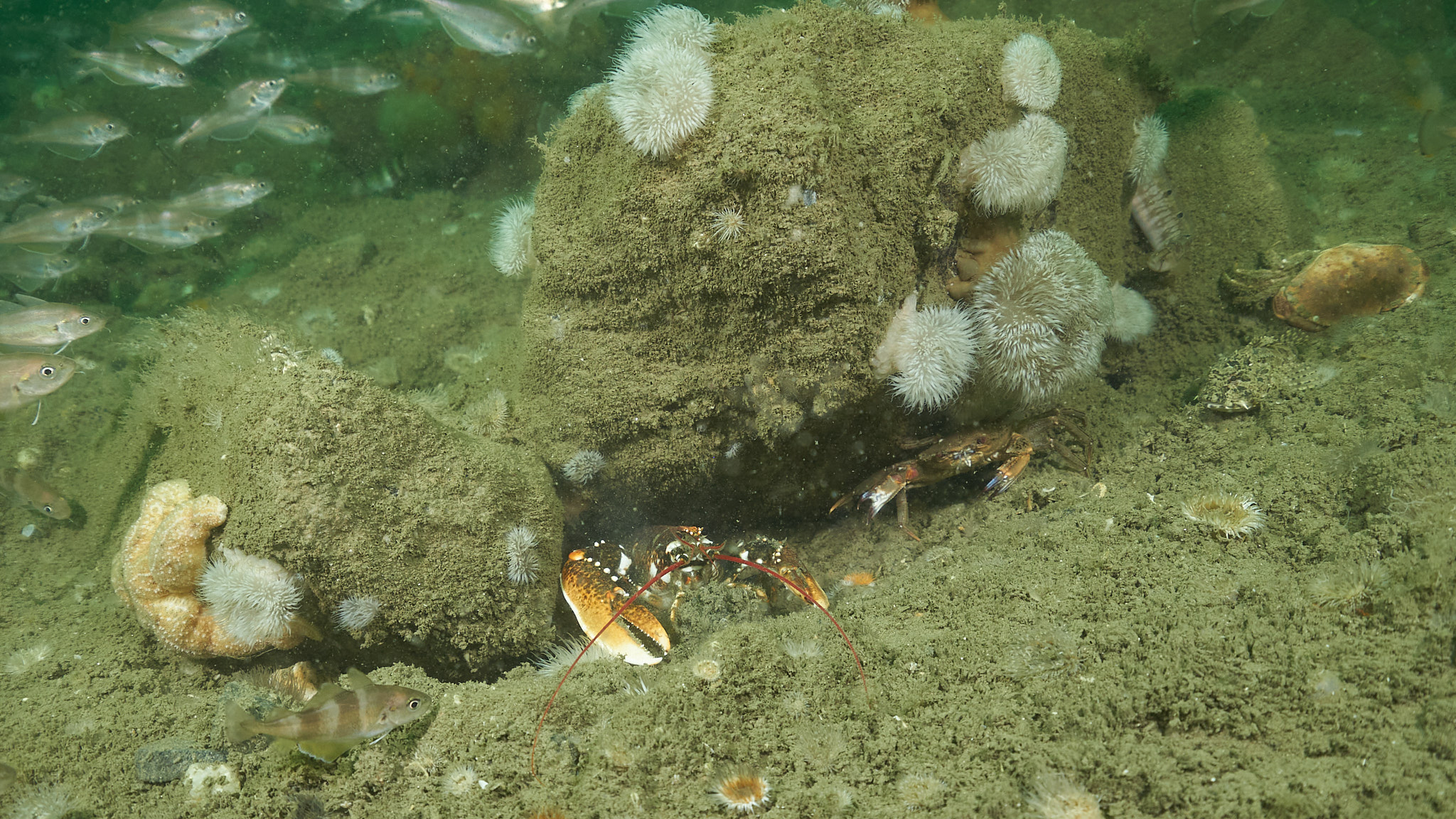
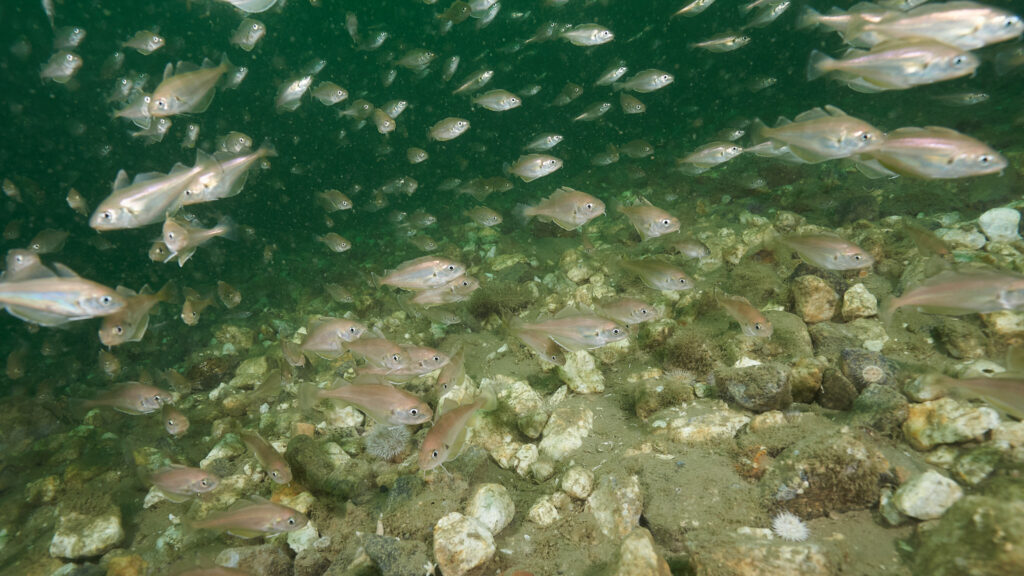
Photographs on this page were made by Dutch Maritime Productions.

2021 - 2025

Project dates

The Netherlands, cable from Hollandse Kust Zuid

Location

TenneT, Van Oord, Waardenburg Ecology

Project lead and partners

Reef / stony habitats, benthos, fish

Target species

Methods

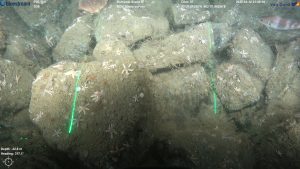
TenneT’s Ecocrossings project is a result of the company’s efforts to embed nature inclusive operations into their business. This project sought to connect biodiversity hotspots with cable crossings by depositing various stones at twelve cable crossing locations, and investigating which application stimulates biodiversity. At three cable intersections the granite layer was replaced with calciferous stone. Monitoring took place over the course of three years. Methods used during monitoring included drop-cam surveys and eDNA sampling and analysis.


Results

Reports from first two years showed no significant difference between the Ecocrossings sites. A more detailed and insightful survey is expected from the results in the next period of 2024. Size, as it turns out, can be more important than the type of material used to promote biodiversity. Failure is more likely to occur when materials roll away, and stability counts. Monitoring surveys showed that growth did not take place on the ‘sprinkler’ layer, but underneath on the larger ‘armor’ boulders. The ‘sprinkler’ layer of smaller rocks had washed away.


Although lab tests showed similarities between the materials of calcareous rocks and natural reefs, this did not translate into the offshore environment where the project took place. Calcareous rock provided a similar chemical marker to reefs, but differed from natural reef acoustics, which also affect growth. Predation on the sea bed can lead shellfish to develop in hidden pockets as opposed to on top of structures, which is a more important factor than the substrate itself.

Tips and tricks

  • For this type of project, larvae outplacement can be more effective than relying on resident larvae to be ready to settle at your location.
  • Though the name sounds charming, ‘sprinkler layers’ can actually derail research efforts and are difficult to decommission.
  • Placing cables 200 meters apart was still not a far enough distance to capture clear and distinctive measurements of the test and control sites.
  • Along with flat oysters, mussels can provide biogenic reefs on substrate and should be considered in settlement studies.
  • Even if your project location is not ideal, remember that nature will follow opportunities. Perfect conditions aren’t a prerequisite to learn important insights.
  • Monitor for as long as you can. One unlucky outlier year can significantly impact results.

Learn about enhancing marine life

Webinar with TenneT

Watch the 24:00 minute mark to see TenneT’s marine ecologist, Annemiek Hermans, discuss Ecocrossings and fish hotels. This clip is from a webinar on January 26, 2023, “Enhancing marine life around the subsea electricity grids in the Dutch North Sea,” organised by RGI and the Offshore Coalition for Energy and Nature (OCEaN).

Partners

Products used on this project

Boulders

Boulders are large pieces of natural stone which vary in weight and size (>25 cm in diameter). Marble, granite, and other types can be used to create crevices and shelters that become havens for marine life.

Stand-alone structures Scour and cable protection

Let's connect

Ready to dive into nature enhancement? Send us an email to share your questions, feedback, or projects you’re working on.

toolbox@therichnorthsea.com