Living Windfarms

Increasingly, incentives are being put forth to encourage the uptake of nature-based solutions in the offshore wind sector to restore reef habitats. In the Dutch North Sea, for example, the IJmuiden Ver Alpha windfarm requires scour protection installation to involve reef-forming solutions. These requirements list specific design criteria and target species. As part of the Living Windfarms Project, Exo Engineering have developed an artificial reef design which is specifically tailored to these criteria. Five of these reefs have been installed as a pilot study at one of TotalEnergies’ offshore infrastructure sites, where the biodiversity they provide will be monitored throughout the project.

This initiative, driven by the offshore wind tender criteria in the Netherlands, aims to research the effectiveness of artificial reefs in habit and population restoration for species such as cod.

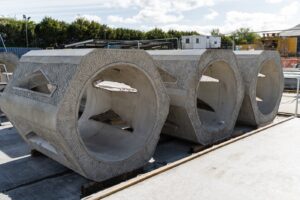
Each reef unit, specially designed by Exo Engineering, weighs 4.5 tons and creates a habitat for young fish species and reef-building organisms like the spiny sand tube worm. This pilot, a collaboration between TotalEnergies EP Nederland, Exo Engineering, and The Living Windfarms Project, will assess the impact of these reefs on marine ecosystems.


2024-ongoing

Project dates

TotalEnergies offshore platform

Location

Living Windfarms Project, Exo Engineering, TotalEnergies EP Nederland. Partners: The Rich North Sea, OWGP

Project lead and partners

Atlantic cod, Ross worm

Target species

  • Stand-alone structures

Methods

This project combines eDNA water sampling techniques and ROV video recording to quantify the bio-colonisation and reef-associated fish community of the artificial reef units over the deployment period of at least five years. The reef units include removable samples, which can be lifted by ROVs for closer analysis of the epifauna prior to recovering entire units at the end of the project. A concrete control block was also deployed alongside the reefs. The results will compare the impact of the artificial reefs on biodiversity in relation to baseline conditions and the control unit.


To maintain accessible costs for deployment and monitoring, the project programme is synced to the existing maintenance schedule at the site. This means that the deployment, monitoring visits and decommissioning will take place during planned vessel operations, removing the need to procure a separated vessel for the monitoring campaign.


Description of the used artificial reef:

Standalone artificial reef enhancement

Function: Artificial reef add-on, to provide habitat for Atlantic Cod and Ross worm, enhancing the biodiversity of scour protection used in the North Sea.

Weight: 4.5t

Dimensions (LxWxH): 1.8m x 1.6m x 1.6m

Habitat features:

  • Textured sides for shellfish settlement, algae colonisation and coral growth.
  • Large tunnels provide shelter for juvenile fish such as cod while preventing sedimentation.
  • Add-on wood and metal panels facilitate the colonisation of a broader range of biodiversity.
  • Small tunnels and holes for crustaceans and reef dwelling fish such as blennies.

Customisation: Textures, material composition.

Installation: Reef units were installed from a crane with a large strop connected through the unit. The strop was released using an ROV. Other deployment methods could also use automatic or acoustic release mechanisms as alternatives.

Results

Is the biodiversity of the artificial reefs significantly different from the biodiversity associated with existing marine infrastructure after five years? This project aims to answer this question through quantitative data acquired by annual monitoring (the first round to be completed mid-2025).

Results will quantify differences in biodiversity provision between the artificial reefs, existing offshore infrastructure, baseline environment and control units.

Tips and Tricks

  • To ensure relevant project outputs, research should be tied to real world scenarios whenever possible, such as upcoming policies or industry requirements.
  • Maximize vessel time by combining projects that require sea travel with partners where possible.
  • Don’t let the “perfect” become the enemy of the “good”. Not all variables can be controlled. Make use of any data that can be collected, or that already exists, to inform research decisions.
  • Allow for extended lead times during project planning to understand the decommissioning and permitting requirements at the deployment site, as this can restrict the options for pilot study design.

Partners

Products used on this project

ExoLodge

Exo Engineering

Artificial reefs made from GeoBlock® Environmentally friendly concrete, feature textured surfaces, a range of holes and tunnels, with wood and metal panels which all provide colonization opportunities for different species; enhancing the biodiversity of scour protection used in offshore windfarms.

Stand-alone structures
Visit website

Let's talk

Would you like to know more about this project or get involved? Send an email to the project lead.

info@exoenginereing.co.uk