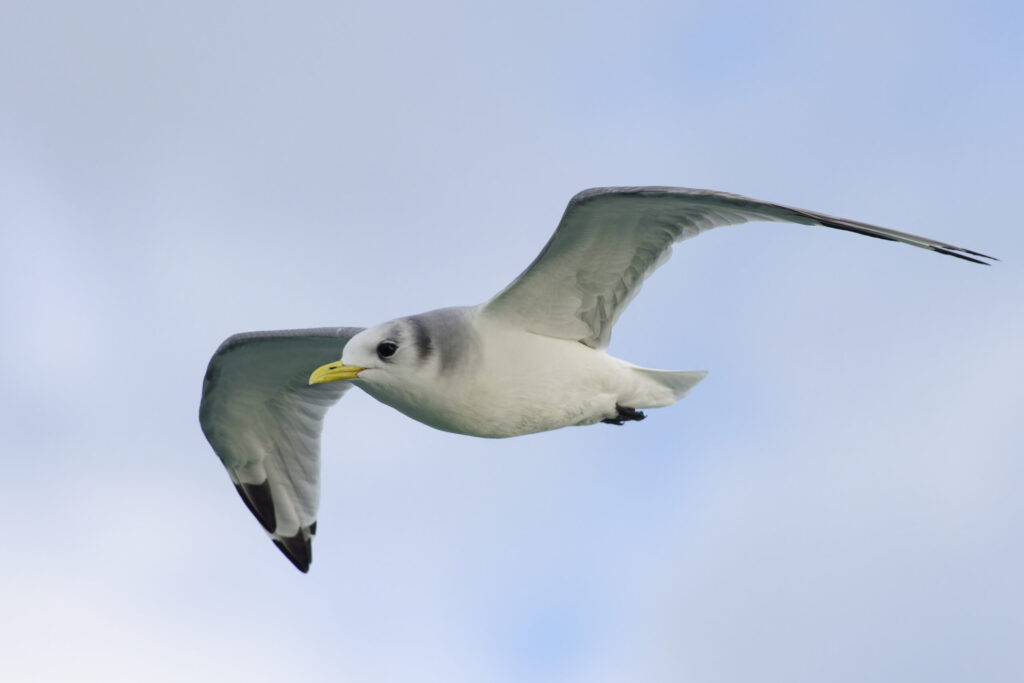
This project did not involve the construction or testing of an artificial breeding structure. Instead, it assessed the feasibility of creating artificial nesting habitat for Black-legged kittiwakes in the Dutch North Sea. Two potential approaches were explored: purpose-built offshore nesting structures (“kittiwake hotels”) and the retention, adaptation or repurposing of existing offshore oil and gas platforms as breeding habitat.
The assessment combined a review of scientific literature, international case studies and interviews with experts involved in artificial nesting structures and offshore kittiwake colonies. Examples from the United Kingdom and Norway were examined, including purpose-built nesting structures and offshore platforms that already support breeding colonies. Particular attention was given to design characteristics such as nest density, shelter, predator protection, height, orientation, and opportunities for adaptive or modular design.
Existing offshore oil and gas platforms were identified as an important nature-enhancing asset, as Black-legged kittiwakes already use these structures as breeding habitat in the Dutch North Sea. The study therefore also explored whether suitable platforms could be retained or adapted, reducing the need for entirely new structures. The suitability of potential breeding locations depends on factors such as food availability, nesting conditions, protection from predators and disturbance, and the characteristics and remaining lifetime of offshore infrastructure.
As a desk study, the project did not include field monitoring. Instead, existing monitoring data and international experiences were reviewed. One of the main recommendations was to carry out a comprehensive baseline survey of Black-legged kittiwakes on offshore platforms in the Dutch North Sea, as current population estimates remain incomplete. The study suggests that future monitoring should focus on colony occupancy, breeding success, and the long-term development of populations if artificial nesting structures are implemented.
The project was commissioned by the Nature Regeneration North Sea program (NN) as part of its efforts to support vulnerable seabird populations. Through a combination of literature review, case studies and expert consultation, the study evaluated the ecological, technical, legal, practical, and financial feasibility of creating additional breeding opportunities for Black-legged kittiwakes in the Dutch North Sea.