TreeReefs North of Texel

TreeReefs are fully biodegradable artificial reefs, crafted from sustainably sourced orchard trees. These innovative structures mimic natural habitats, offering shelter, breeding grounds, and feeding opportunities for a wide range of marine species. As the wood gradually breaks down, it enriches the surrounding waters with vital nutrients, fostering a healthier and more resilient ecosystem. By reintroducing wood into the sea, TreeReefs help restore ecological balance and enhance biodiversity. In April 2022, TreeReefs were deployed in the Eierlandse Gat tidal basin, north of Texel, as part of a PhD project at NIOZ, now continued by Rijkswaterstaat.  

The project demonstrates the strong potential of TreeReefs to support marine life in offshore wind installations. They are expected to complement scour protection and facilitate the establishment of oyster reefs. 
2022-2025

Project dates

Wadden Sea

Location

Marine TREES, NIOZ, Rijkswaterstaat

Project lead and partners

Reef species

Target species

  • Stand-alone structures

Methods

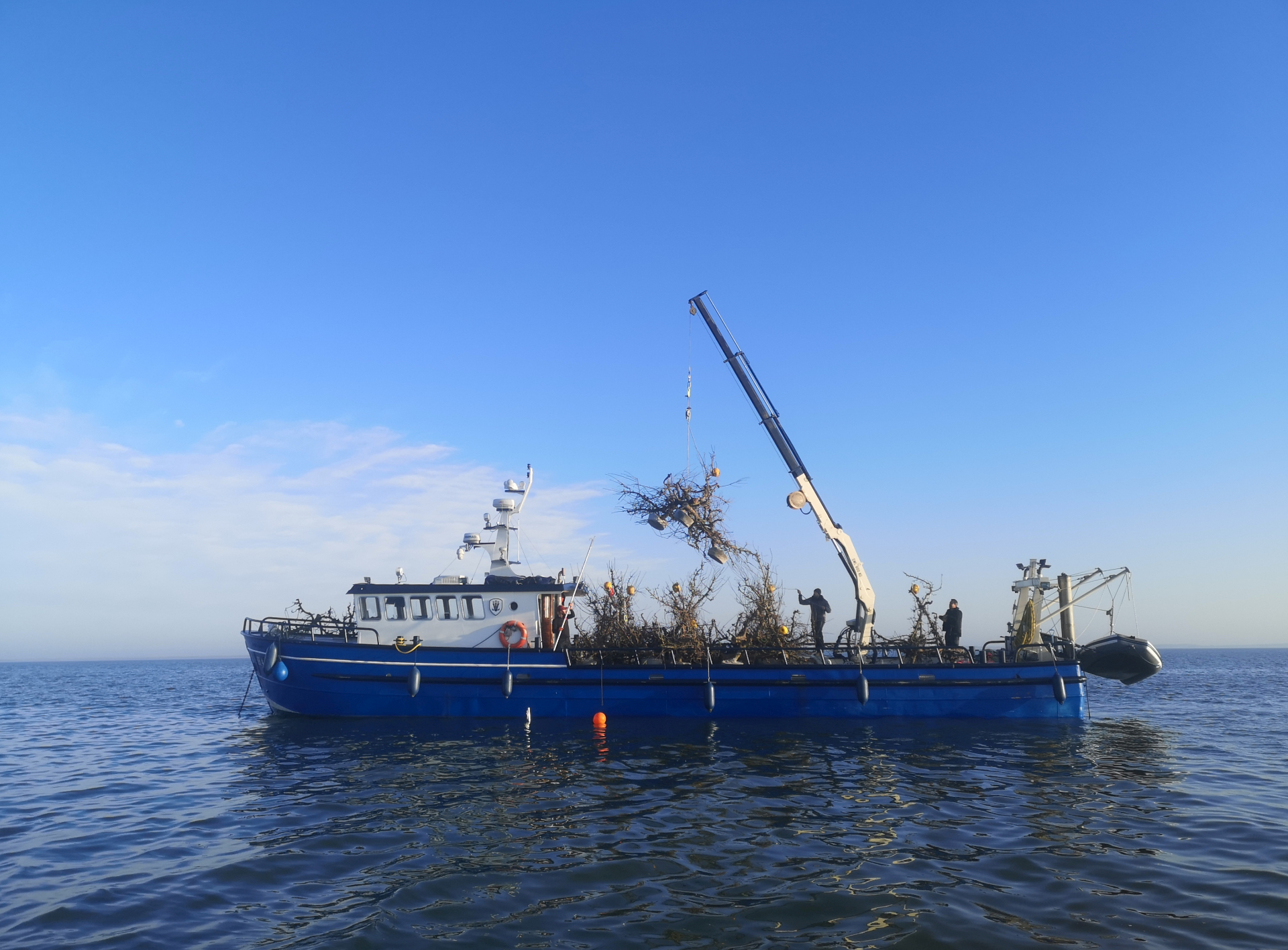
In April 2022, TreeReefs were deployed in the Eierlandse Gat tidal basin, north of Texel, within four tidal channels where seabed morphology is relatively stable. Each channel contained a block of eight TreeReef units, positioned five meters apart. The units were constructed from six short-stemmed fruit trees, bolted together into a pyramid shape. Three upright trees were anchored with concrete weights, while three crossbeams reinforced the structure, creating a stable triangular framework. Deployment was carried out using a crane from a vessel. 


Prior to this field placement, various prototype designs were tested near the seawall at NIOZ Yerseke, where strong tidal action provided a stress test for stability and durability. 


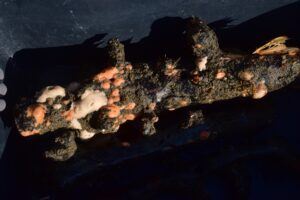
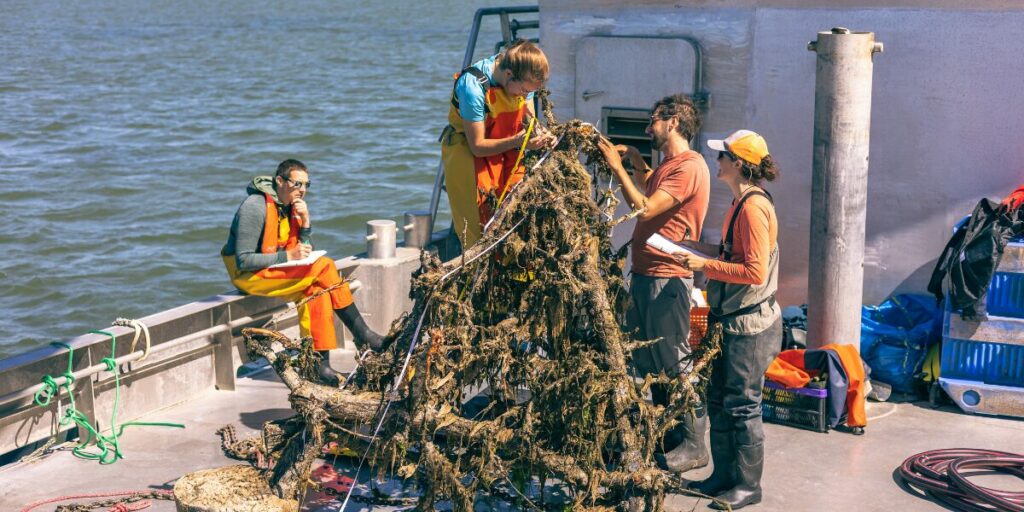
Monitoring focused on both sessile and mobile species. One specially reinforced tree in each block was periodically lifted to assess colonisation by benthic organisms. Fish and mobile invertebrates were studied through trap fishing, active acoustic surveys (fish finders), and passive acoustic monitoring for biological sounds. The reefs remain in place under Rijkswaterstaat’s management, with ongoing monitoring and gradual natural degradation expected to start lasting biogenic habitats such as oyster reefs and seagrass meadows.  

Results

Tree reefs have resulted in a five-fold increase in fish abundance and three-fold increase in fish diversity after only six months. Within 2.5 years of deployment, trap fishing shows that at reef sites fish are 6 times more abundant, larger in size, and more diverse. Green crab foraging activity is 77% lower at reef sites compared to control sites, in an ecosystem that has an over-abundance of these benthic predators. This reduction in crab foraging has important implications for restoration efforts where over-predation of sessile species (e.g. oysters, mussels) is problematic. Sonar surveys show 215–359% greater pelagic fish abundance at reef sites across three size classes of fish monitored. Passive acoustic detections of biological sounds show fish sound activity is five times higher at reef sites, and seals produce twice as much sound around reef areas than control sites, showing the importance of these structures across trophic levels. 


Tips and tricks

  • Think in height: Elevated structures provide far greater habitat value than logs lying flat on the seabed. Designs such as pyramids increase vertical complexity, offering essential shelter for fish and shellfish while remaining stable on the seafloor. 
  • Design for flexibility: Iterative testing has shown the value of self-righting, pyramid-shaped reefs. These can be adapted to specific project goals. For example, by attaching oyster-shell necklaces for pre-seeding or adding habitat modules like lobster houses. 
  • Plan with natural decommissioning in mind: Marine woodborers gradually break down the reefs, transforming woody material into biomass and detritus. Depending on wood type and condition, structural integrity typically lasts 10–20 years, with full degradation expected within about 40 years. This natural process means active decommissioning is unnecessary, while still allowing habitat functions during the reef’s lifespan. 

TreeReefs - Restoring marine nature

video of the deployment of treereefs

Restoring marine nature by planting Tree-reefs

From pear trees to reefs: Tree-Reefs create new underwater habitats that boost marine biodiversity. A natural, biodegradable solution for healthier seas. 

Partners

Products used on this project

TreeReef

Marine Trees

The TreeReef is an artificial reef which uses pear tree wood to create habitat complexity, and a concrete base to aid stability. The wood material will degrade over time.

Stand-alone structures
Visit website

Let's talk

Would you like to know more or collaborate? Send us an e-mail.

info@marinetrees.com