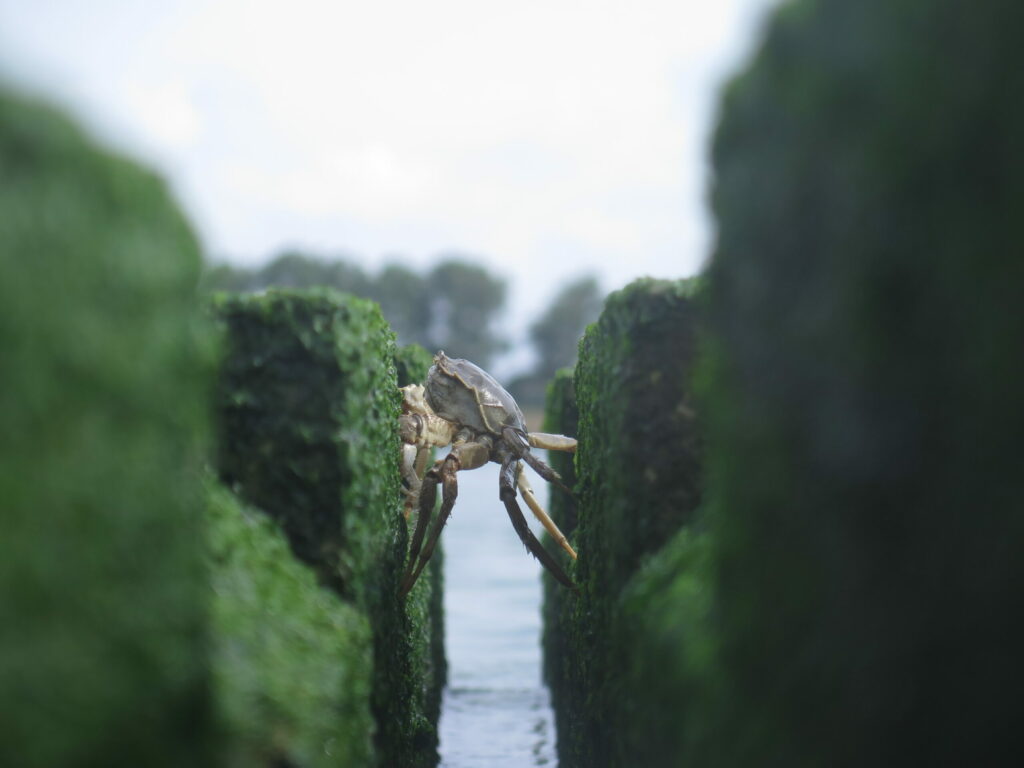
image of a crab on a reefblock in an intertidal zone

The Rotterdam Reef

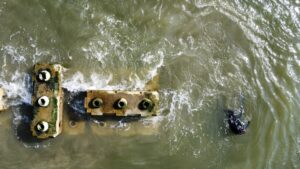
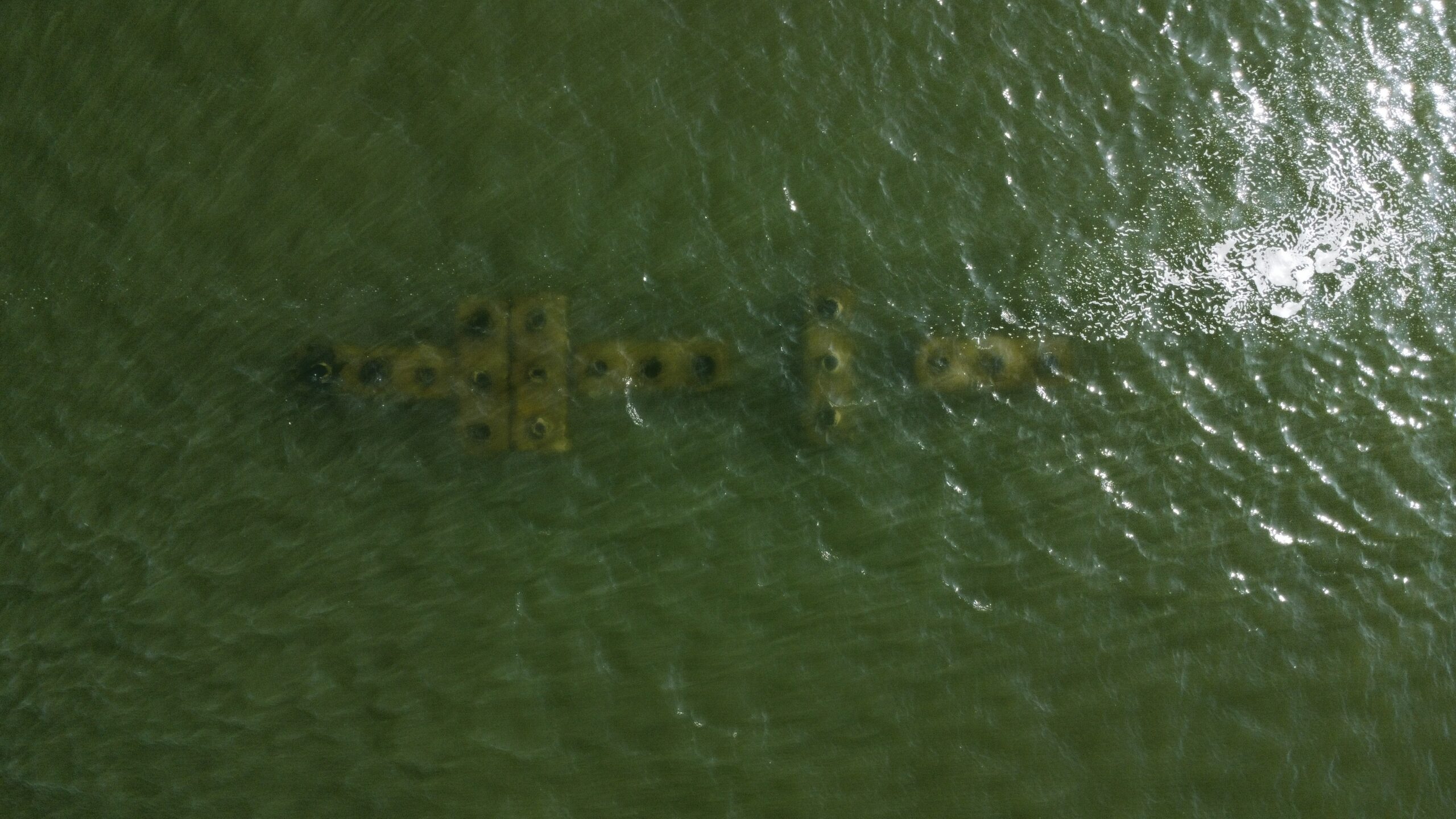
The Rotterdam Reef is a pilot project testing nature-inclusive infrastructure in the dynamic nearshore environment of the Nieuwe Waterweg near Rotterdam. Installed in 2023, the 25-meter-long structure is composed of modular ReefBlocks. This pilot explores how such modular designs can simultaneously fulfill infrastructural needs, such as shoreline defense, and contribute to ecosystem restoration. Although designed for high-energy coastal zones, ReefBlocks are also highly relevant to offshore wind development, where eco-friendly scour protection around turbine foundations is urgently needed. By providing habitat complexity and biodiversity gains alongside erosion control, ReefBlocks have the potential to make offshore wind farms not only a source of clean energy but also a driver of marine ecosystem recovery. 

Developed in collaboration with Rijkswaterstaat, Boskalis, and the Municipality of Rotterdam, the project aims to assess the long-term ecological performance of ReefBlocks and demonstrate scalable, sustainable alternatives to traditional marine infrastructure. Monitoring has been ongoing since 2023 using aerial drones, underwater imagery, GPS, and eDNA. 
2022-2025

Project dates

Nieuwe Waterweg, Rotterdam

Location

Reefy, Gemeente Rotterdam, Rijkswaterstaat, Boskalis

Project lead and partners

Molluscs (oysters, barnacles), crustaceans, fish (herring, mullet)

Target species

  • Stand-alone structures

Methods

The Rotterdam Reef pilot used a layered design and flexible monitoring approach to test how well ReefBlocks perform both structurally and ecologically. After baseline surveys in December 2022, the 25-meter reef was installed in March 2023. The blocks were designed with textured surfaces to support species settlement, internal tunnels to improve water flow and shelter, and an overall layout that mimics natural reef shapes.  

Monitoring was carried out for 2 years, with 9 visits using a range of methods. In order to assess the stability and integrity of the structures, the following techniques were used as part of the monitoring program: aerial and underwater drone footage, GPS tracking with total station, and visual surveys. This data is supplemented with annual soil soundings performed by Rijkswaterstaat and post construction bathymetry surveys of Boskalis. The ecological monitoring program aimed to identify species that settle on and around the structure (epifauna), and mobile species that use the structure as permanent or temporal habitat. In order to map mobile species, eDNA samples were taken from both the structure and nearby areas, executed both with manual sampling and with an automatic sampler for 24h. The growth of epifauna and slow-moving organisms (crabs, urchins) was mainly assessed by analyzing camera footage with a focus on succession, growth, and species diversity. Each method was applied at different intervals based on seasonal needs, site conditions, and specific goals, following a flexible monitoring approach.  

Monitoring was adjusted seasonally based on conditions and goals. All results were compared with baseline data from 2022 to understand how biodiversity developed and how the structure held up in the dynamic environment of the Nieuwe Waterweg. 

Results

Since its deployment in early 2023, the Rotterdam Reef has demonstrated 100% structural stability under dynamic nearshore conditions, which is in agreement with the physical model tests. The structure also created a sheltered zone on its lee side, where species preferring calmer conditions, such as oysters and barnicles, have established themselves. 


Biological monitoring shows that the ReefBlocks support significantly higher ecological performance compared to conventional materials. Species counts revealed up to five times more marine species on ReefBlocks than on traditional concrete structures, and three times higher biodiversity than observed on conventional rock-based solutions. Filter feeders (bivalves) were frequently found inhabiting the internal tunnels, juvenile fish settled on the textured surfaces, and various crustaceans such as crabs used the crevices between modules for shelter. 


Biodiversity analysis using Simpson’s Index indicated roughly twice the biodiversity on ReefBlock surfaces compared to conventional rock. These results are being used to inform future applications in both coastal protection and offshore settings, with comparisons to traditional structures guiding further development. 

Tips and tricks

  • Early alignment on roles and expectations was helpful, and for future projects we recommend even more detailed coordination at the start -especially when it comes to linking field activities and partner involvement.
  • The flexibility built into the project allowed us to adapt when needed, but clear milestones and regular communication were essential to keeping everything aligned.
  • The value of monitoring is greatly improved with an extensive T=0 measurement. A zero measurement has been taken prior to installation of the structure but it deserves recommendation to expand on these measurements to have a better understanding of the results.
  • The ReefBlocks remain in place as part of Rijkswaterstaat’s infrastructure, ensuring continued functionality after the pilot phase.
  • A logical next step is to apply this nature-inclusive design in larger infrastructure projects, especially where ecological restoration and coastal protection can go hand in hand.
  • Reefy is also part of the Joint Industry Project SPREE, which focuses on developing alternatives to scour protection in offshore wind. While The Rotterdam Reef pilot is a separate initiative, the same ReefBlock technology has been tested extensively in offshore conditions, including experiments at Deltares in 2020, 2023, and 2024.

Rotterdam Reef: building with nature in de Nieuwe Waterweg

video about the installation of the rotterdam reef in the tidal area of the river Meuse

A closer look at the Reefy pilot in Rotterdam

Take a closer look at the installation of the Rotterdam Reef in the Nieuwe Waterweg. This footage captures the deployment of ReefBlocks: built for dynamic conditions, the structure marks an important step toward sustainable coastal infrastructure.

Partners

Products used on this project

image of a reefblock not fully underwater

ReefBlocks

Reefy

ReefBlocks are sustainable concrete units with textured surfaces and internal tunnels that enhance habitat complexity and water flow, while using significantly less material than conventional marine structures. With weights of up to 6 tons, ReefBlocks offer a versatile solution, capable of replacing or complementing traditional armor layer rocks in scour protection designs.

Stand-alone structures
Visit website

Let's connect

Do you want to learn more about this project or collaborate? Send us an e-mail.

info@reefy.nl