RESP (Reef Enhancement Scour Protection) Project

Launched in 2023 with Innovate UK funding, the Reef Enhancement for Scour Protection (RESP) project aimed to research, develop, and test ARC Marine’s ecologically enhanced scour protection, culminating in a live pilot installation around an offshore monopile.  

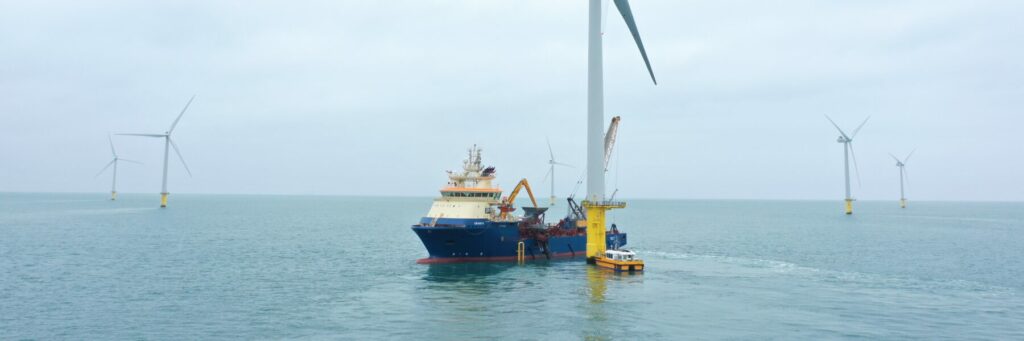
Co-funded by RWE, Innovate UK, and ARC Marine, RESP carries a budget of €3.4 million and is led by ARC Marine. In partnership with RWE, the pilot will see more than 75,000 RESP cubes deployed at turbine J04 of the Rampion Offshore Wind Farm off the Sussex coast. Following the award of a marine licence in March 2025, installation was scheduled for October 2025.  

Beyond Rampion, RESP has a wider ambition: to accelerate biodiversity-enhancing scour protection as a proven technology, enabling its practical integration into offshore wind developments both during and after construction. 
2023-ongoing

Project dates

Rampion OWF: Newhaven, UK

Location

ARC marine, RWE, Innovate UK, British Standards Institution (BSI)

Project lead and partners

European seabass, black seabream, brown crab, common starfish, European flat oyster, Ross worm

Target species

  • Scour and cable protection

Methods

As part of the RESP project, ARC Marine collaborated with the British Standards Institution (BSI) to develop Publicly Available Specification (PAS) 1401:2025, Nature-Inclusive Marine Structures. This is a guidance document that sets out how marine infrastructure can be designed, installed, and managed to support ecosystems, habitats, and species. 


RESP is the first systematic application of this standard in the offshore energy sector. The Reef Cubes® underwent engineering assessments to ensure protection of the J04 monopile foundations, and site-specific scour protection designs were validated through hydrodynamic stability tests at HR Wallingford using real metocean data. 


Ecological baseline surveys established reference points for biodiversity monitoring, confirming no pre-existing communities of ecological interest at turbine JO4, and a marine license was obtained for full-scale installation at Rampion Offshore Wind Farm. 


To assess performance, technical and ecological monitoring will be conducted. Bathymetric surveys will track seabed stability and scour protection effectiveness, while biodiversity assessments will compare ecological communities at RESP sites with traditional rock protection and unprotected turbines in 2026, 2028, and 2030. 

Results

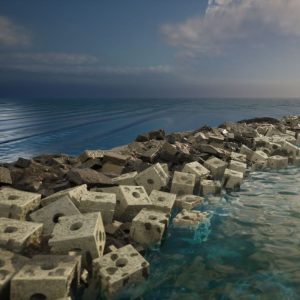
The RESP scour pad is constructed from approximately 75,000 individual Reef Cubes. For the RESP project, Reef cubes® are being deployed in two sizes: the RC350 (35 cm Reef cube® with a central spherical chamber and passageways) and the RC150 (15 cm solid cube). Both are engineered with Nature-Inclusive Design (NID) principles to create habitat while delivering effective scour protection. Designed to measure 32 meters across and two meters high, the pad combines robust engineering with ecological function. Thanks to the modular design of the cubes, their interlocking structure naturally creates accessible spaces and structural complexity, improving habitat metrics, and providing valuable refuge for marine life. 


Manufacturing of the RESP Reef Cubes® has now been completed, with more than 1,800 tonnes produced for installation at the Rampion Offshore Wind Farm. A specialist deployment contractor has been appointed, and offshore works were scheduled for October 2025. The cubes will be installed using a fall-pipe vessel, following procedures like conventional rock placement, demonstrating how nature-inclusive scour protection can be implemented at scale using established offshore construction methods. 

Tips and tricks

  • Tackle permit application and consents as early as possible to manage delays/ inform data collection required.
  • Take nature-inclusive design into account from the offset and set achievable ecological goals, informed by comprehensive literature reviews of scientific publications, historical site data, and local knowledge. 
  • Align with our framework (PAS 1401) to ensure an efficient design phase and maximise impact by focussing on the key metrics associated to the projects ecological and carbon goals. 
  • Establish research design plans early to maximise the output of sea going activity, activities which can be combined to reduce unnecessary carbon contributions and costs. 
  • Ensure all designs are a collaboration between marine science and marine engineering experts, and backed by science and relevant standards 
  • Be clear with any assumptions and/or limitations. Not everything will go to plan but you can identify reasons why, justify the actions taken, and mitigate against them next time. 
  • Aim big and stay true to the values of the project. 

Reef cubes®: nature-inclusive design in action

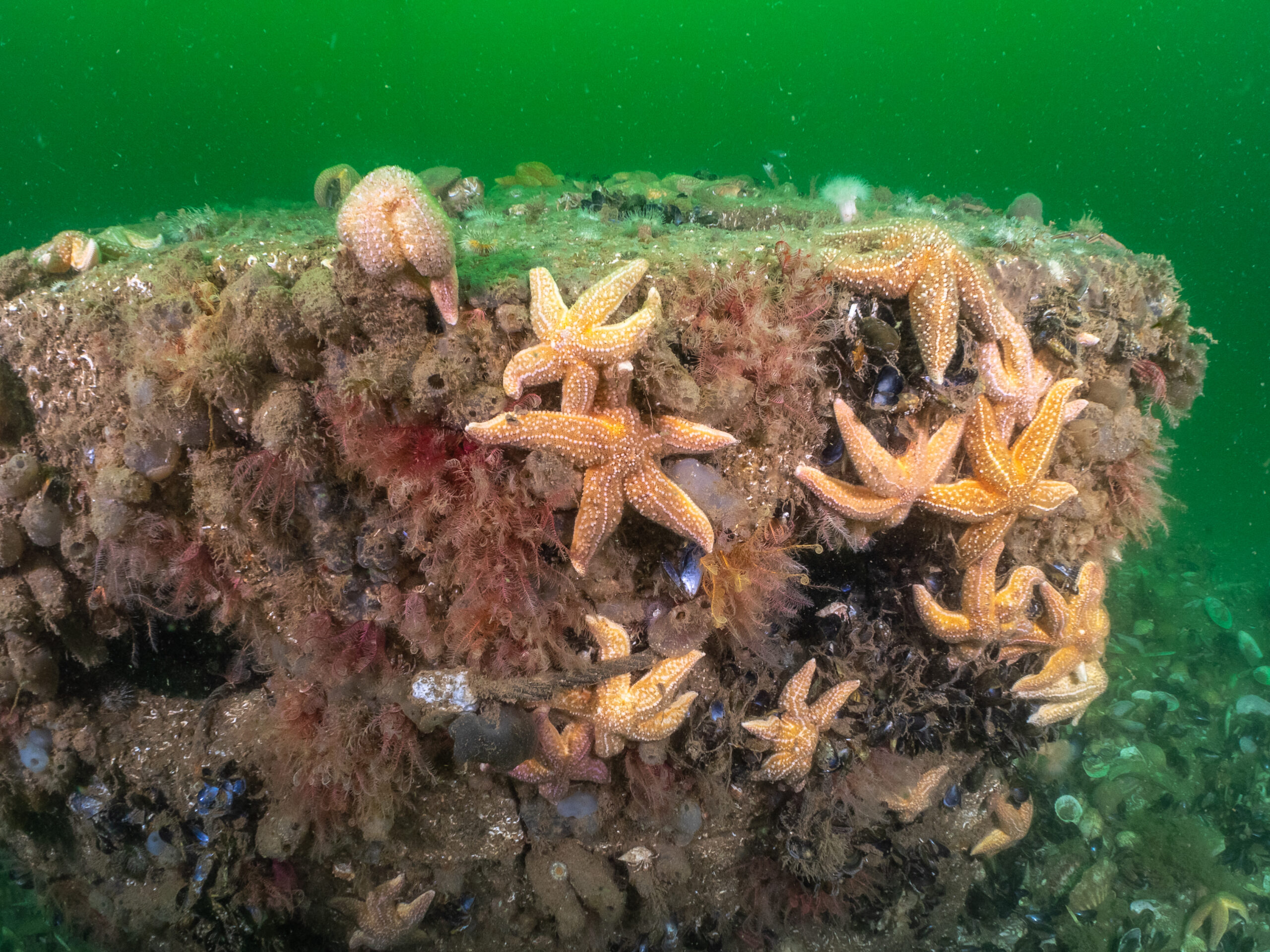
photo of an underwater reef cube full of life

How Reef cubes® support marine biodiversity

This video animation shows how ARC marine’s Reef cubes® are designed to create complex underwater habitats.

Watch and learn more!

Partners

Products used on this project

Reef cubes®

ARC Marine

Reef cubes® are scalable, stackable cubic structures featuring a spherical central chamber and six passageways to enhance reef building and marine biodiversity. The cubes are made of concrete and can be adjusted to user needs.

Stand-alone structures Scour and cable protection
Visit website

Let's talk

Would you like to get involved in nature enhancement or do you want to connect with our ecologists? Send us an e-mail.

hello@arcmarine.co.uk