Mapping Reef Habitat Suitability

Artificial structures such as shipwrecks, oil and gas platforms, and offshore wind turbines introduce rare hard substrates into the predominantly sandy North Sea. These structures act as artificial reefs that attract diverse benthic communities, and nature‑inclusive design (NID) measures are increasingly used to enhance this ecological potential. Yet the success of such measures depends heavily on local environmental conditions and on the specific habitat requirements of individual reef‑associated species.

This project developed spatial habitat suitability maps to support evidence‑based NID in offshore wind farms. By combining biological observations from shipwrecks, platforms, and wind turbines with environmental data, the study identified which conditions drive the presence of reef‑associated species and predicted where these species are most likely to thrive on hard substrates such as scour protection. The resulting maps provide practical guidance for selecting suitable target species and optimal locations for biodiversity enhancement measures across the North Sea.


This project is funded by Nature Regeneration North Sea, a public–private partnership between The Rich North Sea, Ecoshape, and the Ministry of Agriculture, Fisheries, Food Security and Nature. This alliance of government, industry, and NGOs works toward a resilient and healthy North Sea by restoring biodiversity and thereby creating space for sustainable use.


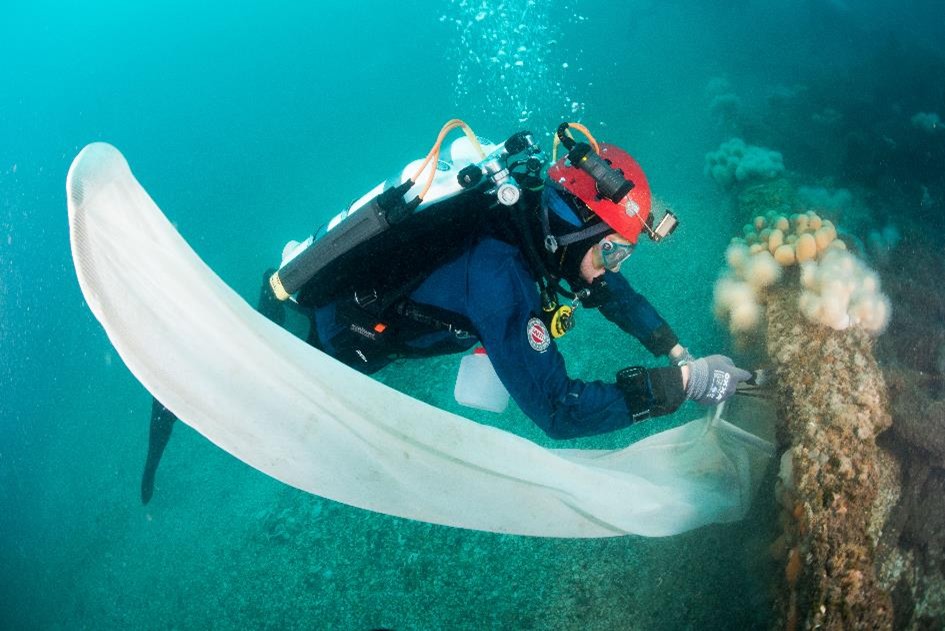
Photo by Cor Kuyvenhoven.

2024-2025

Project dates

Southern North Sea

Location

Wageningen Marine Research, Nature Regeneration North Sea

Project lead and partners

Reef-associated macrofauna (e.g. ross worm, blue mussel, common starfish)

Target species

Methods

This project developed a decision‑support tool rather than testing a specific NID measure, with a focus on scour protection layers as key hard‑substrate habitats. Biological data from 362 samples collected at shipwrecks, offshore platforms, and wind turbines were combined with published BISAR records. Samples were taken by scientific divers and all organisms were identified and counted in the laboratory. Environmental variables such as depth, bottom shear stress, temperature, salinity, chlorophyll, and zooplankton density were linked to each sampling location. These datasets were integrated into a multi‑species model predicting habitat suitability for 95 reef‑associated species. The project builds on earlier research and was initiated to fill a key knowledge gap on where NID measures are most likely to benefit specific species.

Results

The study showed that habitat suitability for reef‑associated species varies widely across the North Sea. Offshore areas in the east were predicted to support higher species richness on hard substrates, while many coastal areas showed lower suitability. Species‑specific patterns were clear: Sabellaria spinulosa showed high suitability in several offshore wind farm zones, Mytilus edulis was mainly suited to north‑eastern offshore areas, and other species displayed distinct spatial trends, underscoring the need for tailored NID approaches. Predicted species richness ranged from roughly 39 to 68 species per location, with non‑native species making up about 7% of assemblages.


The project produced habitat suitability maps for 95 species, predicted species richness maps for the North Sea, and a modelling framework linking environmental conditions to species occurrence on artificial substrates. These outputs support spatial planning of nature‑inclusive design measures in offshore wind development areas.

Tips and tricks

  • Nature‑inclusive design should be tailored to both the location and the target species, as measures that work in one wind farm may not be effective elsewhere.
  • Conduct habitat suitability assessments before construction to select appropriate species and avoid ineffective interventions.
  • Use habitat suitability maps to guide species selection for NID measures.
  • Design scour protection with varied rock sizes and materials to support more diverse communities.
  • Combine physical habitat enhancements with ecological monitoring to evaluate performance over time.
  • Recognise that artificial structures can host diverse reef communities and consider the ecological benefits of leaving certain structures or components in place during decommissioning.

Partners

Let's talk

Want to learn more about the project? Send us an email!

joop.coolen@wur.nl