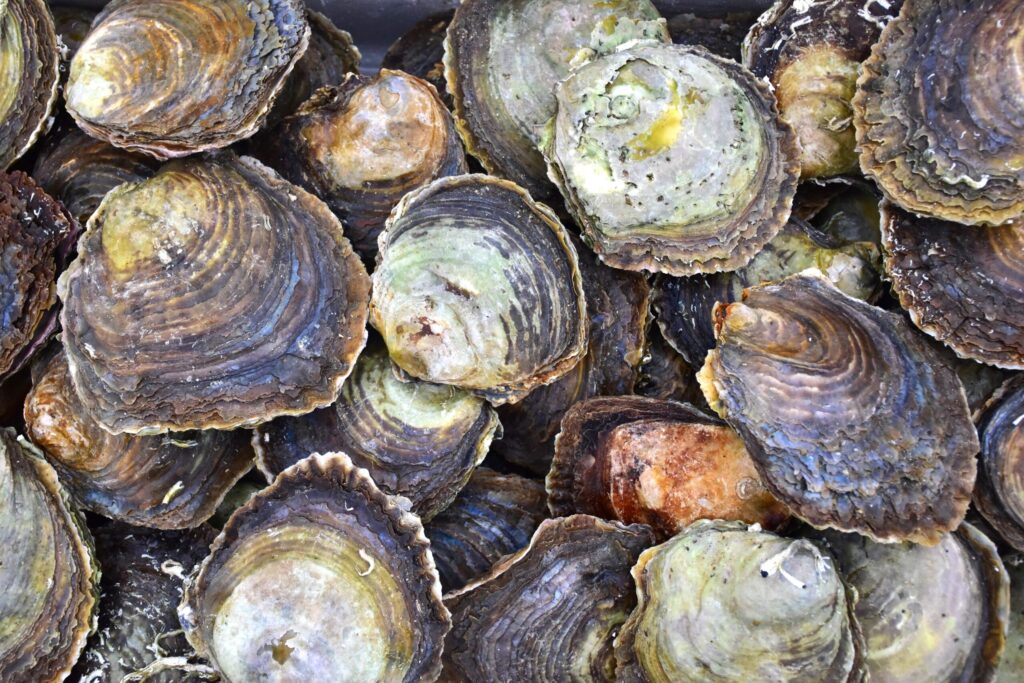
For sustainable restoration of flat oyster (Ostrea edulis) beds in the North Sea, the genetic origin and diversity of the oysters used are crucial for the success and long-term resilience of these reefs. Flat oyster populations in the North Sea have strongly declined and no longer occur in large quantities, meaning that restoration projects depend on oysters sourced from elsewhere. To scale up restoration efforts from pilot projects to ecosystem-level impact, large quantities of oysters are required. Ideally, these oysters should originate from populations that are adapted to local environmental conditions. Hatchery-produced oysters are therefore increasingly used, as they provide a controlled and scalable source while avoiding impacts on remaining natural populations, limiting the risk of introducing invasive species, and allowing for monitoring of disease status.
This project focuses on the role of hatcheries in supporting large-scale flat oyster (Ostrea edulis) restoration in the Dutch North Sea. At the start of the project, there was a knowledge gap regarding the reliability of supply of hatchery-produced oysters, including their disease status, as well as their genetic diversity. To address this, the project combines a hatchery inventory with genetic analysis to assess whether hatcheries can deliver sufficient quantities of oysters with suitable characteristics for restoration. In doing so, it evaluates both the delivery capacity and reliability of hatcheries, and the genetic suitability of the produced oysters for long-term reef development.
The objectives of this project are to assess the reliability, frequency and volume of flat oyster supply from hatcheries, including their veterinary specifications such as infection with, or tolerance to, the parasite Bonamia ostreae. In addition, the project aims to evaluate the suitability of hatchery-produced oysters for large-scale Dutch North Sea restoration, by assessing whether the produced spat has sufficient genetic variation and by determining how many parental oysters contribute to each production cycle.
Program: Nature Regeneration North Sea
Image credit: Naomi Jansen, Natuur & Milieu