Bonamia-free Oysters for North Sea Restoration

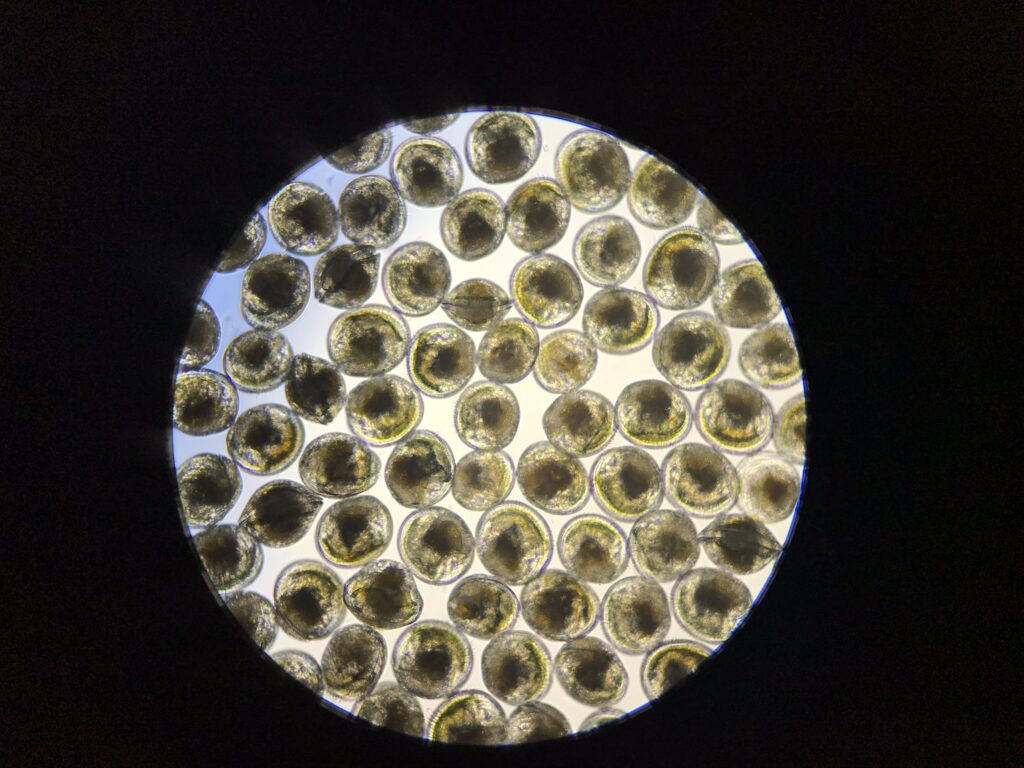
The Breeding Line / KOPON project aimed to improve the hatchery production of Bonamia-free European flat oysters for nature restoration in the Dutch North Sea. As natural recovery of flat oyster reefs is very limited and restoration requires millions of oysters, the project focused on developing a reliable hatchery-nursery method to produce Bonamia-free spat for large-scale outplacement.  


This project addressed a key bottleneck in flat oyster restoration: unpredictable larvae and spat production in hatcheries. It combined hatchery practice, disease screening, algae nutrition research, bacterial monitoring, and field deployment trials to understand potential improvements in broodstock conditioning, larval survival and spat performance. The goal was to create a practical and scalable supply of disease-free oysters for restoration in the North Sea. 
2020-2023

Project dates

Texel, Yerseke and Kamperland (hatchery/cultivation); Voordelta near Brouwersdam (deployment/field trial).

Location

The Rich North Sea, Stichting Zeeschelp, Roem van Yerseke, NIOZ Texel, Wageningen Marine Research (WMR) Yerseke, HZ University of Applied Sciences, Waardenburg Ecology

Project lead and partners

European flat oyster (Ostrea edulis)

Target species

  • Stand-alone structures

The Flat oysters breeding line

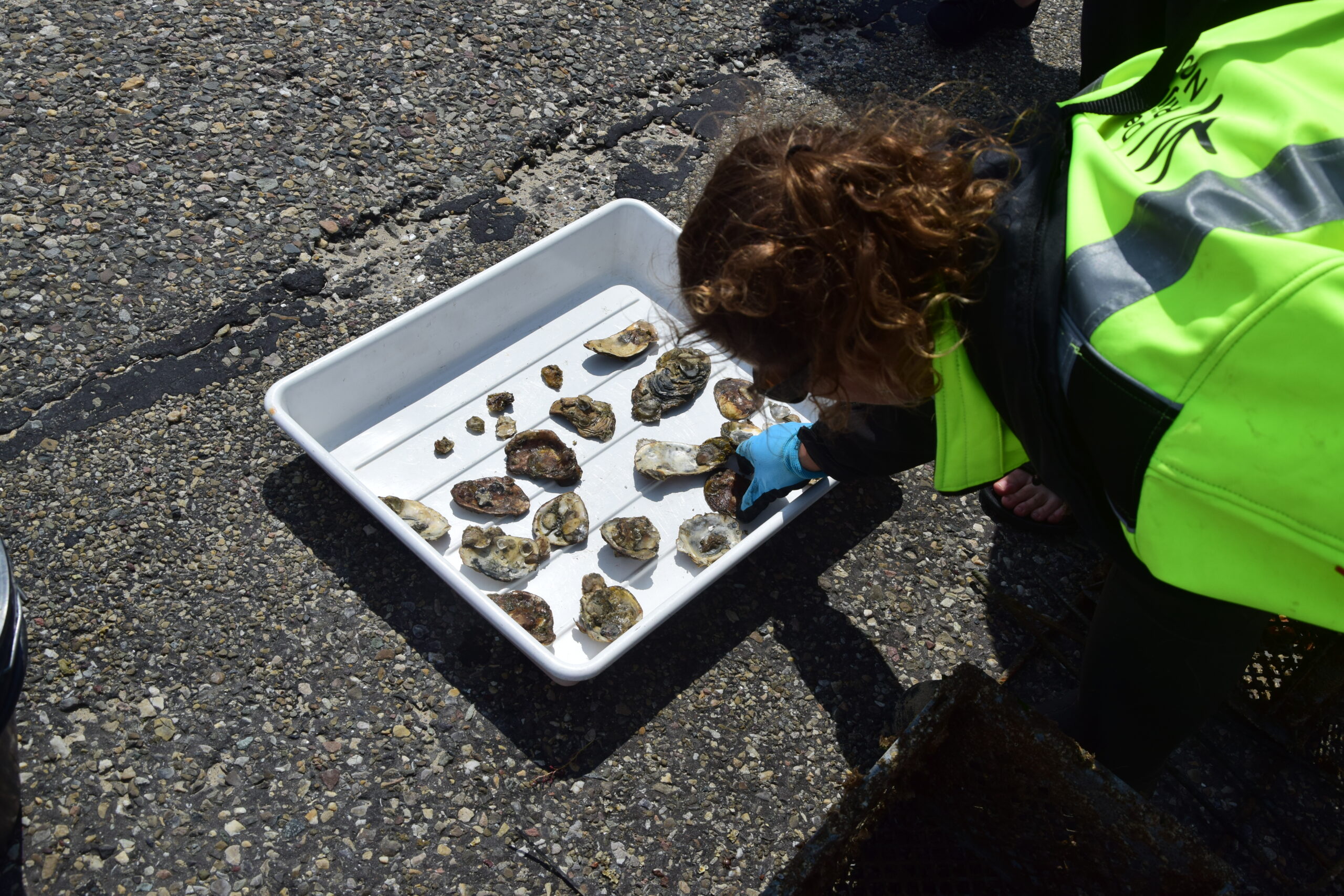
image of drn colleague with the oysters

Working towards reliable flat oyster production for restoration in the North Sea

Watch this video to learn more about the Breeding Line / KOPON project and how partners worked together to develop Bonamia-free flat oyster spat for nature restoration.

Partners

Products used on this project

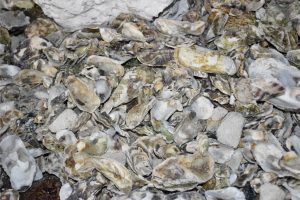
Oyster shells

Oysters are beneficial to the sea, even beyond their lifespan. Empty oyster shells are an all-natural material for marine life to settle.

Scour and cable protection

Let's talk

Would you like to get involved in nature enhancement or do you want to connect with our ecologists? Send us an e-mail.

toolbox@derijkenoordzee.nl